Treating strokes: A race against time
SINGAPORE: When Richard Chew woke up i Thursday morning feeling "a weakness" on the right side of his body, he didn't think information technology was anything out of the ordinary.
"I tried to grab onto my bed only I slipped to the floor," the 57-year-former retiree recalled.
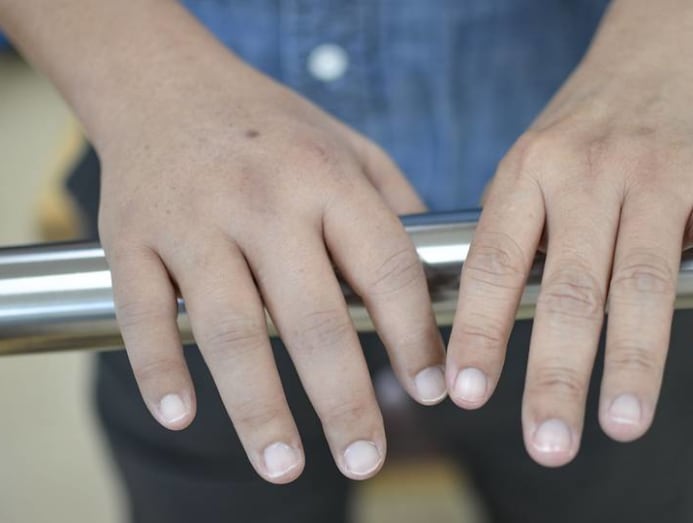
"So I told my wife, I remember I'm still quite okay," Mr Chew said matter-of-factly. "Then she said, okay you accept care, and went on to work.
"I was thinking, for whatever reason, I accept this weakness and it may go abroad at night."
But when his married woman came home from piece of work that evening, she noticed that the features on the correct side of his face "were twisted", and his speech had become slurred.
These were the typical signs of a stroke.
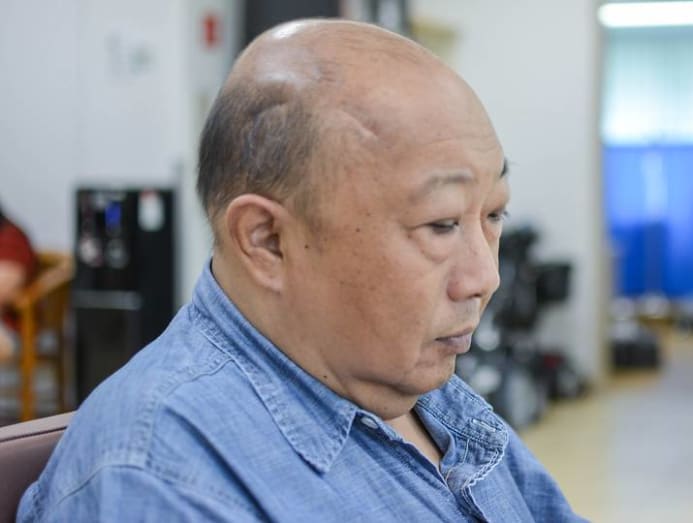
"Nosotros didn't know how to react to this," said Mr Chew. "Of course, the showtime affair is to become to the hospital. But should we become straight?"
Somewhen, they decided to go to Singapore General Hospital's blow and emergency department (A&East), just in their own car, driven by Mrs Chew.
When they reached the infirmary, they had to annals and go through triage, before the A&E nurse plant out that Mr Chew has had a stroke and immediately activated the astute stroke squad.
By the time the team attended to Mr Chew, more than 12 hours had passed since the time he woke up with that tell-tale "weakness".
Due to the filibuster, the team couldn't administrate treatments which would have helped him if they were administered within 6 hours subsequently onset of the symptoms. He was sent to the stroke unit of measurement for monitoring to prevent further complications.
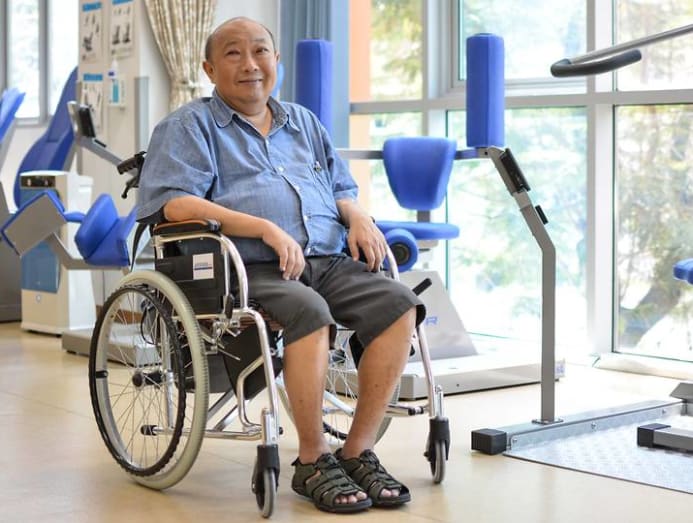
Fast forrard 3 months, Mr Chew is at present wheelchair-leap and unable to employ cutlery with his right hand.
It was only afterwards his experience that he realised that he had made two mistakes - not going to the hospital immediately, and going to the A&E by car.
CALL 995, Fifty-fifty WHEN YOU ARE Outside A Hospital
While more patients are arriving at the hospital "early on plenty" for timely treatment since the commencement Spot Stroke campaign in 2016, only around l to 60 per cent came in by ambulance, according to Associate Professor Deidre Anne De Silva.
READ: More stroke patients arriving within crucial time period for treatment: Written report
The senior consultant at the National Neuroscience Constitute said that Singapore still has "a ways to get", adding that getting stroke patients to call the ambulance will be the focus of the next campaign.
"In comparison to other developed countries where lxxx to 85 per cent of stroke patients come up in by ambulance, that'due south a bad effigy considering if you look at the other way around, it means 50 per cent are non coming in by ambulance," said Dr De Silva.
Nosotros still do see people who will go the next twenty-four hour period to a GP (General Practitioner) commencement. We still see people who will wait for their girl or son to come home from work. Nosotros still see people say I volition take some Panadol and sleep and hope it goes away.
"I recall partly it'south a lack of awareness of stroke symptoms. It's a lack of sensation that stroke is treatable, and that time is of the essence," added Dr De Silva.
Even if you are next to the hospital, but call 995, she stressed.
It might seem counterintuitive to telephone call for an ambulance if you are correct outside the infirmary, merely calling 995 triggers a chain of events.
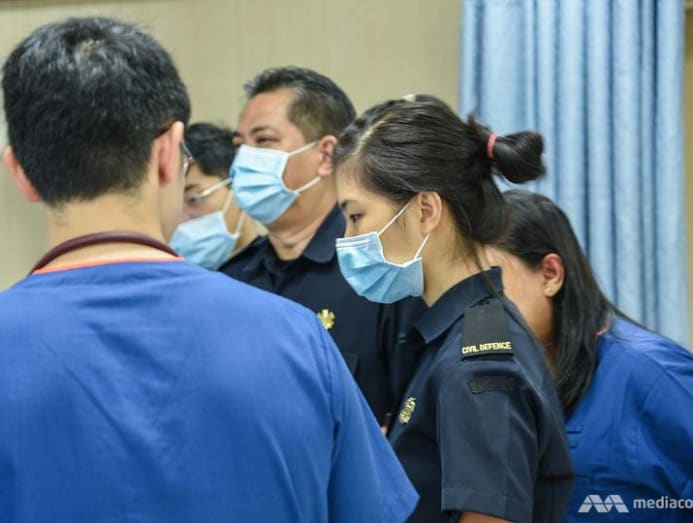
The Singapore Civil Defense force (SCDF) paramedics are trained to identify stroke symptoms and will notify the emergency department en-route and so that patients receive immediate medical attention upon their arrival at the infirmary.
72-year-one-time Tan Mong Huat was luckier than Mr Chew.
Last year, the former Grab driver was ferrying a rider from Jurong to Labrador Park when his vehicle crashed into a lamp post.
"At showtime I thought my car tyre was punctured," said Mr Tan. "But luckily my customer was alert and saw that I might have (had) a stroke. He asked me not to movement and immediately called the ambulance."
SCDF paramedics arrived within x minutes and he was sent to National Academy Hospital where he was given the jell-busting medication.
As a outcome of that timely intervention, he suffers no side-effects or disability from the stroke.
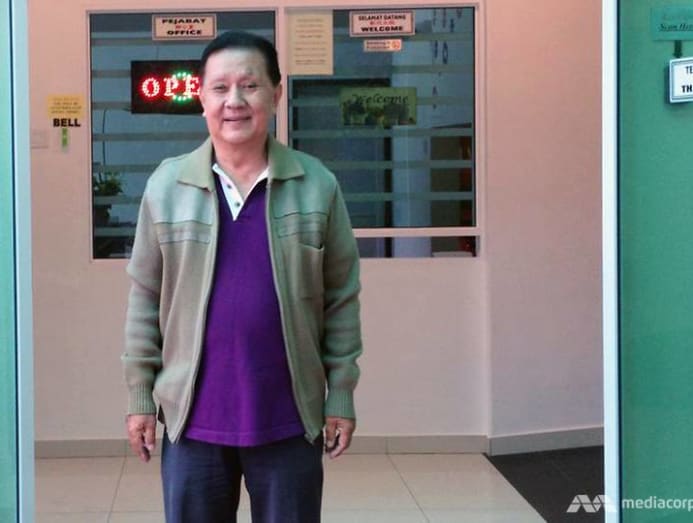
When asked what he would have done if he were alone, Mr Tan replied: "I would not know, that was the first time I suffered a stroke and I don't know the symptoms."
"I desire to express my heartfelt gratitude towards the passenger who called 995, the SCDF paramedics and the hospital'southward acute stroke team. Their actions had contributed to a meliorate consequence for me and my condition would have been more serious without their prompt response."
"TIME IS Brain"
A stroke occurs when a part of the brain gets damaged due to an interruption in its blood supply. When encephalon cells die because they do not receive oxygen from blood, it is irreversible.
Stroke remains the 4th leading crusade of death in Singapore and one of the top contributors of adult disability.
In the treatment of acute stroke, the team's priority is to save the brain tissue that hasn't died, which in turn saves body function and the patient's quality of life in the long run.
"If you ask me, the amend term is time is brain," said Dr De Silva.
The more time we lose, the more than brain nosotros're losing.
For the squad, the clock starts ticking not when the patients passed through the doors of the hospital, only when they offset experienced the symptoms.
The most common signs of a stroke are sudden drooping of i side of the confront, weakness of one side of the trunk and difficulty speaking or understanding voice communication.
There's a bit of "detective work" involved in pinpointing when the symptoms starting time appeared, said NNI Accelerate Exercise Nurse Il Fan.
"The patient'south history is the virtually important thing that nosotros want to notice out when they arrive," said Il Fan. "Sometimes if patients come in unable to talk, we go to the extent of checking their phone to trace their last conversations and find out (the last time) they were well."
"If the SCDF (paramedics) can actually give united states a lot of information then it will be helpful, considering sometimes even though passers-past witness it, they don't come up together with the patient to the emergency department."
When CNA observed the Tan Tock Seng Hospital's acute stroke team in action on a Tuesday, an warning came in at 7.48am, just 18 minutes after Two Fan started her shift.
"When we receive a notification that in that location is a stroke instance (inbound), we will go downward to the emergency department," said Il Fan as she quickened her pace to the basement where the resuscitation area is located.
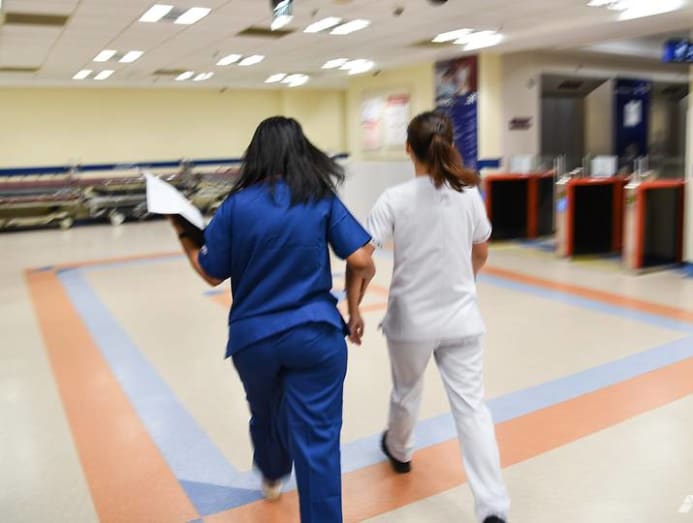
The notification comes in the form of a text, with the patient's proper name, gender, NRIC number and the estimated time of arrival at the hospital. For Il Fan and her team, this information is key to minimising the debilitating effects of stroke.
"Nosotros desire to try to employ the time as much as nosotros tin can, so usually we will screen through the patient's medical history while we will wait for patients to arrive. Very specifically if the patient is on any blood-thinning medicine, and if there is whatever history of stroke before."
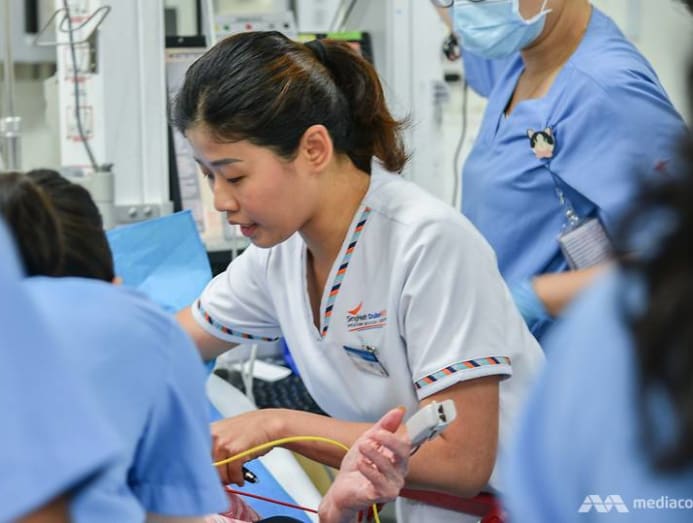
Before the ambulance arrives, the stroke team would already be on stand-by fully prepared to assess the patient in one case he or she is transferred from the ambulance.
The patient wasn't accompanied past a family unit member and had difficulty speaking due to facial droop, which fabricated it trickier to pinpoint the time of onset of stroke.
In such cases, a brain scan will be done.
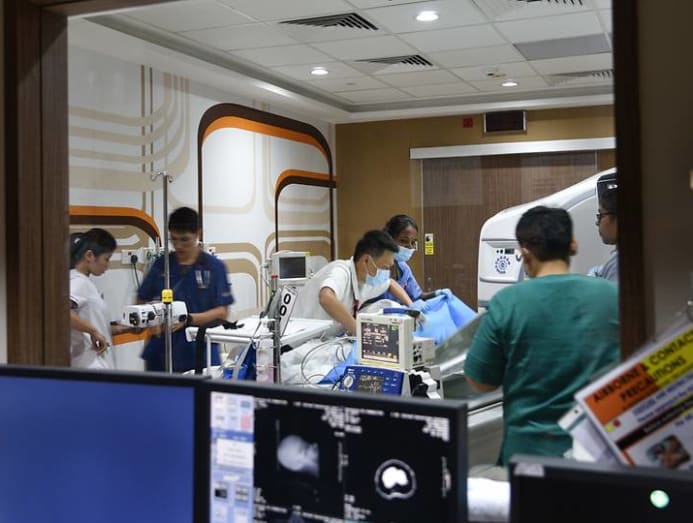
In this case, the patient was non given whatsoever acute treatment due to take chances of complications post-obit an cess and sent to the stroke unit for further monitoring.
In another example a few hours later, the patient who came in by ambulance, was given jell-busting medication inside 45 minutes.
A DISEASE THAT CAN BE TREATED
The treatment window is now wider as enquiry on stroke advances. For example, since the introduction of the jell-busting medication in 1996, the window has widened from three hours to 6 hours.
While this means more people are eligible for acute stroke treatments, Dr De Silva is concerned that this would lull patients into thinking they accept ample time to get treated.
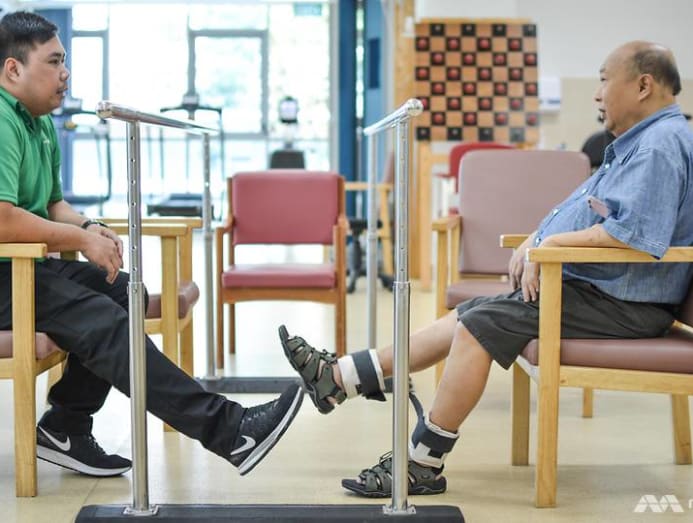
Mr Chew goes to Ren Ci @ Bukit Batok St. 52 for rehabilitation twice a week to regain some function in his limbs. At the rehabilitation center, he shared the reason why he agreed to this interview. He hoped to help more than people understand the urgency of treatment for stroke, and non finish upward in his shoes.
"Maybe i day, I can look for my remaining golf clubs, and so get and hit some balls in the driving range," he said wistfully. "That's my goal."
oppenheimerscaughbod.blogspot.com
Source: https://cnalifestyle.channelnewsasia.com/singapore/treating-stroke-warning-signs-treatment-228666
0 Response to "Treating strokes: A race against time"
Post a Comment