Stateoftheart Endoscopic Procedures for Pancreatic Cancer E Coronel I Waxman
Betoken OF VIEW
Endoscopic ultrasound in the diagnosis and staging of pancreatic cancer
J. Iglesias García, J. Lariño Noia and J. Eastward. Domínguez Muñoz
Gastroenterology Department. Foundation for Enquiry in Digestive Diseases. University Hospital of Santiago de Compostela. A Coruña, Espana
Correspondence
Abstruse
Pancreatic cancer is the vthursday leading cause of cancer-related decease in Western countries. The 5-year survival charge per unit is approximately 4%, without significant changes over the final 50 years. This poor survival rate and bad prognosis are associated with the diagnosis of advanced-stage disease, which precludes the simply potential curative handling - surgical resection. In this setting, the principal objective in the management of pancreatic cancer is to perform an early on diagnosis and a correct staging of the disease. Endoscopic ultrasonography (EUS) appears to be an essential tool for the diagnosis and staging of pancreatic cancer. EUS diagnostic accurateness for detecting pancreatic tumors ranges from 85 to 100%, conspicuously superior to other imaging techniques. EUS accurateness for the local staging of pancreatic cancer ranges from 70 to 90%, superior or equivalent to other imaging modalities. EUS-guided fine-needle aspiration allows a cyto-histological diagnosis in nearly ninety% of cases, with a very low complexity rate. At nowadays, the formal indications for EUS-guided fine-needle aspiration are the necessity of palliative treatment or whenever the possibility of neoadjuvant treatment is present. Information technology could be also indicated to differentiate pancreatic adenocarcinoma from other pancreatic conditions, similar lymphoma, metastasis, autoimmune pancreatitis or chronic pancreatitis. We can conclude that EUS is an essential tool in the management of patients with pancreatic tumors.
Cardinal words: Endoscopic ultrasound. Pancreatic cancer. Diagnosis. Stanging.
Introduction
Pancreatic cancer is the 5th leading crusade of cancer death in Western countries, and the 2d crusade of cancer death amongst gastrointestinal tumors (1). The five-year survival rate is approximately 4%, without significant changes over the terminal 50 years (2). The merely grouping of patients with pancreatic cancer and an acceptable prognosis are those with potentially resectable pancreatic tumors (3).
Bad prognosis in these patients is related to tumor stage, which may preclude the only potentially curable handling - surgical resection. Traditionally, patients with pancreatic cancer without distant affliction underwent a surgical procedure. Nevertheless, without an adequate preoperative study, the resectabily rate was between 5 and 25%, with loftier morbidity (three). On the other manus, past performing a correct report prior to surgery, this resectability rate can accomplish 75% (4). That is the reason why the primary objective in the management of this disease is to perform both an early on diagnosis and a right staging, which will allow to perform the only potentially curative treatment - surgical resection.
Nowadays, there are many procedures to perform the diagnosis and staging of pancreatic cancer. Some of them are abdominal ultrasounds (AU), helical CT, magnetic resonance imaging (MRI), endoscopic retrograde cholangiopancreatography (ERCP), intestinal arteriography, and more recently endoscopic ultrasonography (EUS).
EUS allows a detailed analysis of the pancreatic parenchyma, pancreatic ducts, and all structures side by side to the pancreas. Information technology has get an essential tool for the study of pancreatic diseases, and is considered the reference method for the diagnosis and staging of inflammatory pancreatic diseases and solid pancreatic tumors, as well equally a key point in the diagnostic and staging algorithms for pancreatic tumors (five,6).
The aim of this article is to perform an exhaustive revision of the literature regarding the usefulness of EUS in the diagnosis and staging of pancreatic cancer. First we will analyze its usefulness in the diagnosis of pancreatic tumors, later on nosotros will hash out its accuracy in the evaluation of local infiltration and lymph-node extension. Finally we will focus on the importance of cyto-histological evaluation for pancreatic tumors.
Endoscopic ultrasounds in the diagnosis of pancreatic tumors
When analyzing the results of the virtually important and best-designed studies, the sensitivity of EUS for the diagnosis of solid pancreatic tumors was 96% (range 85-100%) (vii-27). However, these studies included benign pancreatic diseases and ampullary tumors, and this may bias the assay in favor of EUS (7-ten,16,17,22-24). Only if nosotros only evaluate studies regarding malignant pancreatic tumors, the diagnostic sensitivity is even so very loftier, clearly superior to that of other imaging techniques. When EUS was compared to conventional CT (viii,ix,11-17,21-24,26,27), EUS diagnostic sensitivity was superior (98 vs. 77%, p < 0.0001), and differences remained when the comparing was performed with helical CT (16,18,22-24). Amidst all these studies, we should focus in 2 of them comparing EUS and multidetector-row CT. In a retrospective report published past Agarwal et al. (26), including 81 patients, EUS sensitivity for tumor detection was 94%, while CT merely reached 86%. DeWitt et al. (27) published similar data. They performed a comparative, prospective, accomplice study, including 120 patients. EUS sensitivity for tumor detection (98%) was superior to that of multidetector-row CT (86%).
Merely the point in which EUS has demonstrated to exist clearly more authentic is in the identification of small pancreatic tumors (Fig. i), which accept been undetected by other imaging techniques (7,8,12,18,22,26,27-29). For tumors between fifteen and 35 mm, Legman et al. (xviii) reported that EUS and helical CT both detected all tumors in 14 patients; however, when analyzing tumors smaller than 15 mm, EUS detected six of six cases, whereas CT could only detect iv. Muller et al. (12) analyzed the sensitivity of EUS, CT and MRI in the identification of tumors smaller than 3 cm, showing values of 93, 53 and 67%, respectively. In the same commodity, for tumors smaller than 2 cm, the sensitivity of each was xc, 40 and 33%, respectively. Ardengh et al. (28) performed a retrospective written report including 17 patients with tumors smaller than iii cm. EUS identified the pancreatic tumor in all cases (100%), whereas CT could only identify the tumor in 94% of cases. Nonetheless, just the study by DeWitt et al. (27) was performed with multidetector-row CT in this grouping of patients with smaller tumors. In their study, including 19 patients with tumors smaller than 25 mm, they reported a not-significant tendency towards improved detection by EUS as compared to multidetector-row CT (89 vs. 53%, p = 0.08). Recently, two new papers take confirmed these data, showing that EUS allows to detect pancreatic lesions not clearly visualized by CT or MRI, and is able to diagnose pancreatic tumors (from pancreatic adenocarcinomas to pancreatic metastases or endocrine tumors) in nearly 65% of cases (thirty,31).
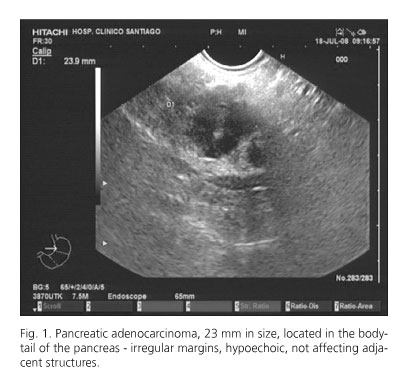
EUS is also considered very accurate in ruling out the presence of a pancreatic tumor. Catanzaro et al. (32) retrospectively identified 80 patients with clinical suspicion of pancreatic cancer and normal EUS. After a hateful follow-upward of 24 months, 1 patient with evidence of chronic pancreatitis on EUS was establish to take a pancreatic cancer at surgery. No patient with normal pancreatic EUS results adult cancer during the follow-up period. In the study performed by Agarwal et al. (26) in patients with clinical suspicion of pancreatic cancer, and without identifiable lesions on multidetector-row CT, the diagnostic accuracy of EUS was 92%, able to exclude the presence of a pancreatic tumor when EUS was normal.
In this context, the almost important newspaper summarizing all the in a higher place data has been the systematic review published by DeWitt et al. (33). They compared CT and EUS for the diagnosis of pancreatic cancer. They analyzed the 11 meliorate-designed studies, including a total of 678 patients. 9 of these studies analyzed the diagnostic accuracy of EUS for the detection of pancreatic tumors. All studies included were consecutive serial of patients, with a good standardization of imaging techniques, independently compared to the gold standard, and almost all were prospective studies. In all these studies, the diagnostic sensitivity of EUS was superior to that of helical CT, even more than so for pancreatic tumors smaller than 3 cm. They concluded that EUS is superior to CT for the detection of pancreatic cancer.
Endoscopic ultrasounds in the staging of pancreatic cancer
At this indicate we will review the existing evidence on local staging (with specific information on vascular and lymph-node infiltration) and the evaluation of resectability. The staging of pancreatic cancer is based on the TNM nomenclature published by AJCC in 2002 for pancreatic adenocarcinoma (Table I).
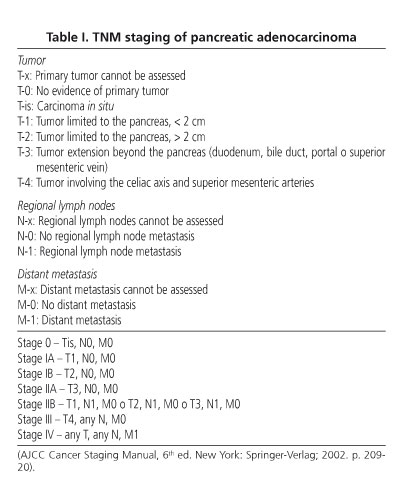
Local staging
Several studies have been published evaluating the accuracy of EUS in the loco-regional staging of pancreatic cancer, in most cases compared to CT scanning, and in more recent studies with MRI and/or selective abdominal arteriography. Globally, the reported accuracies of local staging by EUS in pancreatic cancer range from 62 to 94%, and those of nodal staging range from 72 to 92% (34-46). The most important written report, as previously mentioned, has been the systematic review published by DeWitt et al. (33), comparing CT and EUS for the staging of pancreatic cancer. In this setting, the authors analyzed the 11 best designed studies, including a total of 678 patients, comparing the accuracy of both techniques for the local staging of this tumor. All studies included were consecutive series of patients with a good standardization of imaging techniques, independently compared to the gold standard, and almost all were prospective studies. The authors conclude that EUS appears to be superior to CT for T-staging and regarding the vascular invasion of the splenoportal confluence; however both techniques appear to be equivalent for nodal staging and overall vascular invasion.
Vascular invasion
For the overall evaluation of vascular invasion the accurateness of EUS ranges from 40 to 100% (fourteen,15,21,23, 24,38,41,42). The sensitivity and specificity of EUS for malignant vascular invasion range from 42 to 91% and from 89 to 100%, respectively (21,38,41,42,47). However, when comparison EUS to CT in this setting, some studies accept demonstrated that EUS is more than authentic (14,21,23,24), and other authors have reported that the accuracy of CT is superior (15,41,42). MRI showed similar results to EUS (41,42). When evaluating the unlike vessels separately, for venous invasion EUS demonstrated to exist equal or superior to CT, with a sensitivity and overall accurateness of 56 and 50%, respectively (11,13). For the evaluation of portal vein and confluence invasion, the sensitivity of EUS increases to 60-100%, in all cases superior to all other imaging techniques (7,9,17,22,48). However, for the evaluation of the superior mesenteric vein, superior mesenteric artery and celiac axis, the sensitivity of EUS decreases to 17-83% (37), 17% (23) and 50% (9), respectively, with amend results for helical CT (9,22,23). This is in contrast to the splenic artery and vein, an area easily seen and staged by EUS (seven,48,49). A systematic review of the literature and a meta-analysis take been recently published, analyzing the usefulness of EUS in this setting. A total of 29 studies were evaluated (due north = 1,308), in which EUS showed a sensitivity for the detection of vascular invasion of 73%, with a specificity of 90.ii% (50).
Lymph node infiltration
The master node stations to be evaluated in pancreatic cancer are the perigastric, periduodenal, and celiac nodes, every bit well equally the hepatic hilium. Mediastinal lymph nodes should also exist evaluated (upwardly to five% of patients with pancreatic cancer may present with lymph node metastases at this level). The accuracy of EUS for Due north staging ranges from 64 to 82% (nine,11,12,19,21,22,24, 27,33-39). Although EUS is highly sensitive for detecting regional lymph nodes, information technology has difficulties in distinguishing between malignant and inflammatory adenopathies, the performance of a EUS-guided fine-needle aspiration (FNA) of lymph nodes existence necessary on many occasions (51-53).
Evaluation of respectability
Now, tumors considered irresectable are those with metastatic affliction, invasion of the superior mesenteric artery, celiac centrality and hepatic artery, and/or pregnant invasion of the portal vein and superior mesenteric vein (Fig.2).

In the various series published in the literature, the sensitivity and specificity of EUS for the evaluation of resectability in pancreatic cancer was 69 and 82%, respectively (16,18,21,27,36,39,40,45,54). When comparing EUS to other imaging techniques, results are contradictory. Generally, most studies showed a similar accuracy of EUS, helical CT, and MRI in the evaluation of resectability for pancreatic cancer. The study from Soriano et al should exist emphasized (41). The authors found the initial use of CT or EUS more accurate, followed by other technique to complete the evaluation. Tierney et al. (47) suggested that helical CT should be performed initially, and that EUS should also be employed in most patients because of its improved detection of vascular invasion. DeWitt et al. (27) showed similar conclusions, supporting the use of various imaging techniques, mainly EUS and helical CT. Again, the most important report in this setting has been the systematic review published by DeWitt et al. (33) comparison CT and EUS for the evaluation of resectability in pancreatic cancer. In this setting, the authors analyzed iv out of the xi all-time-designed studies, which specifically analyzed this particular. All studies included were consecutive serial of patients with a good standardization of imaging techniques, independently compared to the gold standard, and almost all were prospective studies. The authors conclude that EUS appears to be superior to CT for the evaluation of resectability in pancreatic cancer.
EUS tin also help in the evaluation of tumor extension to the liver (allowing the performance of a EUS-guided FNA for cyto-histological confirmation), peritoneum and/or pleura (with the possibility to perform a EUS-guided FNA of ascites or pleural effusion) (55-61).
CYTO-Histological confirmation of pancreatic tumors
From an oncologist's point of view, it is necessary to obtain a cytological or histological sample in order to confirm the diagnosis of pancreatic adenocarcinoma when the patient requires chemotherapy and/or radiotherapy, or whenever the possibility of neoadjuvant treatment is present (62-64). Notwithstanding, many authors accept other indications to achieve a histological confirmation of pancreatic adenocarcinoma in the presence of a pancreatic mass. Amidst them, the ability to place lesions other than pancreatic adenocarcinoma, similar lymphoma, pancreatic metastasis, autoimmune pancreatitis or an inflammatory mass in chronic pancreatitis, because these lesions require completely dissimilar treatments; there is also the possibility of additional information that may assist in preoperative patient and family unit counseling and therapy selection, as is the case with other tumors(65,66).
In this context, EUS-guided FNA has proven be an essential tool because of its loftier accurateness and minimum complications (Fig. 3). In the studies published in the literature, the diagnostic accuracy of EUS-guided FNA ranges betwixt 72 and 96% (67-79). Amid them, we volition focus on the most complete papers. In the written report past Harewood et al. (76), prospectively including 185 sequent patients with the suspicion of pancreatic cancer, all patients underwent a CT scan (61 with CT-guided FNA) and 91 ERPC (41 of them with cytology). In 58 patients with a negative cytology later CT-guided FNA, EUS-guided FNA showed a sensitivity for malignancy of 90%. Similarly, in 36 patients with a negative cytology at ERCP, the diagnostic sensitivity for malignancy with EUS-guided FNA was 94%. Eloubeidi et al. performed a study prospectively including 158 patients with the suspicion of pancreatic cancer. With a median of iii passes, the diagnostic sensitivity, specificity and overall accuracy of EUS-guided FNA was 84.3, 97, and 84%, respectively (78).

EUS-guided FNA, apart from determining whether a lesion is beneficial or malignant, besides allows a definitive diagnosis to exist established. Iglesias-García et al. (80), in a prospective study including 62 consecutive patients with pancreatic solid tumors, were able to diagnose lesions other than pancreatic adenocarcinoma, like lymphoma, oat-cell metastasis from lung cancer, anaplastic carcinoma, and up to 24 inflammatory masses. The overall diagnostic accuracy obtained was 90.2%. Notwithstanding, the about important indicate in this setting was the differential diagnosis with chronic pancreatitis and autoimmune pancreatitis. In this context, EUS-guided FNA has too shown a high accuracy (81-84). Varadarajulu et al. (82), in a study including 282 patients with pancreatic solid tumors with and without chronic pancreatitis, EUS-guided FNA showed a lower diagnostic sensitivity in the group of patients with chronic pancreatitis (73.nine vs. 91.iii%; p = 0.02). There were no differences in terms of specificity (100 vs. 93.8%) and overall accuracy (91.5 vs. 91.4%). In another study published by Ardengh et al. (83), including 69 pancreatic masses in chronic pancreatitis, EUS-guided FNA increased diagnostic sensitivity, specificity and overall accuracy in the differential diagnosis between inflammatory conditions and pancreatic adenocarcinoma (72.vii vs. 63.six%; 100 vs. 75.9%; 95.vii vs. 73.9%; respectively).
Still, the best study, in terms of design and final conclusions, is the 1 published past Eloubeidi et al. (84) - 547 patients who underwent EUS-guided FNA over a 4.5-year flow were enrolled. Patients underwent surgical exploration and resection based on their comorbidity status, and on testify of resectability based on spiral computed tomography (CT) and EUS imaging reviewed in a multidisciplinary arroyo. The operating characteristics of EUS-guided FNA for solid pancreatic masses were: sensitivity 95% (95% CI: 93.2-95.iv), specificity 92% (95% CI: 86.6-95.7), positive predictive value 98% (95% CI: 97-99), negative predictive value 80% (95% CI: 74.9-82.7). The overall accuracy of EUS-guided FNA was 94.1% (95% CI: 92.0-94). Of the 414 true positive patients according to EUS-guided FNA, 138 (33%) were explored; 82% of true positive patients were ultimately constitute inoperable and received palliative therapy or chemotherapy. They ended that EUS-guided FNA is a safe and highly accurate method for tissue diagnosis in suspected pancreatic cancer. This arroyo allows for a preoperative counseling of patients, minimizing surgeon's operative time in cases of unresectable disease, and avoids surgical biopsies in a bulk of patients with inoperable affliction. Nonetheless, they recommend a surgical exploration of patients with a clinical scenario suspicious for pancreatic cancer - a mass institute on EUS or CT, but inconclusive or negative cytology.
Finally, in the study published by Lambert et al. (85), EUS-guided FNA had of import clinical implications for patient direction; in fact, it tin contraindicate surgical procedures in 41% of patients, avoid the performance of other diagnostic techniques in 57% of cases, and alter the therapeutic attitude in 68% of cases.
But a crucial bespeak of EUS-guided FNA is the low charge per unit of complications associated with the technique. The risk of bacteremia is very depression; the risk of acute pancreatitis ranges from 1 to two%, and the probability of bleeding or peritonitis is rare. The group of cystic lesions is more dangerous, mainly due to the gamble of infection; therefore, antibiotics are always recommended following pancreatic cyst aspiration (86). The largest study included 355 patients who underwent EUS-guided FNA for solid pancreatic lesions. Major complications were encountered in 9 patients (2.54%, 95% CI 1.17-4.76). Acute pancreatitis occurred in 3 of 355 (0.85%, 95% CI 0.17-2.45); 2 patients were hospitalized, and 1 patient recovered with outpatient analgesics. Three patients were admitted for severe pain after the procedure; all were treated with analgesics and subsequently discharged with no sequels. Ii patients (0.56%, 95% CI 0.07-2.02) developed fever and were admitted for intravenous antibiotics; ane patient recovered with intravenous antibiotics and the other required surgical debridement for necrosis. One patient required the utilize of reversal medication. Overall, 1.97% (95% CI 0.eighty-4.02) of patients was hospitalized for complications. None of the patients experienced clinically significant hemorrhage, perforation, or expiry (87). The rate of tumoral seeding with EUS-guided fine-needle aspiration is significantly lower than with percutaneous-guided fine-needle aspiration. In the paper published by Micames et al., in the EUS-guided FNA group only ane patient out of 46 adult peritoneal carcinomatosis, compared to 7 out of 43 in the percutaneous-guided FNA group (2.two vs. 16.3%; p < 0.025). The authors recommended EUS-guided FNA every bit the method of choice for diagnosis in patients with potentially resectable pancreatic cancer (88).
Conclusions
We can conclude that EUS is superior to other imaging techniques for the detection of pancreatic tumors, mainly in small pancreatic solid lesions. EUS seems to be superior to other imaging procedures for local staging (T), mainly in the evaluation of vascular invasion of the portal vein and splenic vessels. All the same, EUS seems to be equivalent to the other imaging techniques (mainly CT browse) in the evaluation of nodal staging and overall vascular invasion, and in the assessment of tumor resectability. However, it is important to bespeak out that EUS is clearly operator-dependent, and in very experienced hands its accuracy is very loftier; new multidetector-row CT equipments take been developed recently, which may probably be similar in terms of accuracy to EUS.
EUS-guided FNA is as well becoming essential in the management of pancreatic cancer, mainly related to its high accuracy and low morbidity and mortality. At present, a diagnosis of pancreatic adenocarcinoma must exist confirmed when the patient requires chemotherapy and/or radiotherapy, or whenever the possibility of neoadjuvant treatment is present. It is too very important that atmospheric condition other than pancreatic adenocarcinoma, which require specific treatment, be identified.
References
1. Jemal A, Murray T, Ward Eastward, Samuels A, Tiwari RC, Ghafoor A, et al. Cancer statistics, 2005. CA Cancer J Clin 2005; 55: x-30. [ Links ]
2. Williamson RCN. Pancreatic cancer: the greatest oncological claiming. Br Med J 1988; 296: 445-half dozen. [ Links ]
three. Trede M, Schwall M, Saeger Hard disk. Survival afterward pancreatoduodenectomy: 118 consecutive resections without an operative bloodshed. Ann Surg 1990; 211: 447-58. [ Links ]
four. Warshaw AL, Gu ZY, Wittenberg J, Walkman Ac. Preoperative stanging and cess of resectability of pancreatic cancer. Arch Surg 1990; 125: 230-iii. [ Links ]
5. ASGE Standards of Practice Committee, Gan SI, Rajan E, Adler DG, Baron Th, Anderson MA, et al. Role of EUS. Gastrointest Endosc 2007; 66(iii): 425-34. [ Links ]
six. Boujaoude J. Office of endoscopic ultrasound in diagnosis and therapy of pancreatic adenocarcinoma. World J Gastroenterol 2007; 13(27): 3662-half dozen. [ Links ]
vii. Yasuda K, Mukai H, Fujimoto Due south, Nakajima Grand, Kawai K. The diagnosis of pancreatic cancer by endoscopic ultrasonography. Gastrointest Endosc 1988; 34: 1-eight. [ Links ]
8. Rösch T, Lorenz R, Braig C, Feuerbach S, Siewert JR, Schusdziarra V, et al. Endoscopic ultrasound in pancreatic tumor diagnosis. Gastrointest Endosc 1991; 37: 347-52. [ Links ]
9. Rosch T, Braig C, Gain T, Feuerbach S, Siewert JR, Schusdziarra 5, et al. Staging of pancreatic and ampullary carcinoma by endoscopic ultrasonography: comparison with conventional sonography, computed tomography, and angiography. Gastroenterology 1992; 102: 188-99. [ Links ]
10. Snady H, Cooperman A, Siegel J. Endocopic ultrasonography compared with computed tomography with ERCP in patients with obstructive jaundice or small peri-pancreatic mass. Gastrointest Endosc 1992: 38: 27-34. [ Links ]
xi. Palazzo L, Roseau G, Gayet B, Vilgrain V, Belghiti J, Fékéte F, et al. Endoscopic ultrasonography in the diagnosis and staging of pancreatic adenocarcinoma: results of a prospective report with comparison to ultrasonography and CT scan. Endoscopy 1993; 25: 143-150. [ Links ]
12. Müller MF, Meyenberger C, Bertschinger P, Schaer R, Marincek B. Pancreatic tumors: evaluation with endoscopic Usa, CT, and MR imaging. Radiology 1994; 190: 745-51. [ Links ]
13. Marty O, Aubertin JM, Bouillot JL, Hernigou A, Bloch F, Petite JP. Prospective comparing of ultrasound endoscopy and computed tomography in the assessment of locoregional invasiveness of cancerous ampullary and pancreatic tumors verified surgically. Gastroenterol Clin Biol 1995; 19: 197-203. [ Links ]
14. Melzer Eastward, Avidan B, Hayman Z, Coret A, Bar-Meir S. Preoperative cess of blood Wessel interest in patients with pancreatic cancer. Isr J Med Sci 1996; 32: 1086-viii. [ Links ]
fifteen. Dufour B, Zins M, Vilgrain V, Levy P, Bernades P, Menu Y. Comparison between screw Ten-ray computed tomography and endosonography in the diagnosis and staging of adenocarcinoma of the pancreas. Clinical preliminary study. Gastroenterol Clin Biol 1997; 21: 124-thirty. [ Links ]
16. Howard TJ, Chin AC, Streib EW, Kopecky KK, Wiebke EA. Value of helical computed tomography, angiography and endoscopic ultrasound in determining resectability of periampullary carcinoma. Am J Surg 1997; 174: 237-41. [ Links ]
17. Sugiyama Grand, Hagi H, Atomi Y, Saito M. Diagnosis of portal venous invasion past pancreatobiliary carcinoma: value of endoscopic ultrasonography. Abdom Imaging 1997; 22: 434-8. [ Links ]
eighteen. Legmann P, Vignaux O, Dousset B, Baraza AJ, Palazzo L, Dumontier I, et al. Pancreatic tumors: comparing of dual phase helical CT and endoscopic sonography. AJR Am J Roentgenol 1998; 170: 1315-22. [ Links ]
19. Akahoshi K, Chijiiwa Y, Nakano I, Nawata H, Ogawa Y, Tanaka M, et al. Diagnosis and staging of pancreatic cancer by endoscopic ultrasound. Br J Radiol 1998; 71: 492-6. [ Links ]
twenty. Harrison JL, Millikan KW, Prinz RA, Zaidi South. Endoscopic ultrasound for diagnosis and staging of pancreatic tumors. Am Surg 1999; 65: 659-65. [ Links ]
21. Gress FG, Hawes RH, Savides TJ, Ikenberry SO, Cummings O, Kopecky K, et al. Role of EUS in the preoperative staging of pancreatic cancer: a large single-middle experience. Gastrointest Endosc 1999; 50: 786-91. [ Links ]
22. Midwinter MJ, Beveridge CJ, Wilsdon JB, Bennett MK, Baudouin CJ, Charnley RM, et al. Correlation between spiral computed tomography, endoscopic ultrasonography and findings at functioning in pancreatic and ampullary tumours. Br J Surg 1999; 86: 189-93. [ Links ]
23. Mertz Hour, Sechopoulos P, Delbeke D, Leach SD. EUS, PET and CT scanning for evaluation of pancreatic adenocarcinoma. Gastrointest Endosc 2000; 52: 367-71. [ Links ]
24. Rivadeneira DE, Pochapin K, Grobmyer SR, Lieberman MD, Christos PJ, Jacobson I, et al. Comparing of linear array endoscopic ultrasound and helical computed tomography for the staging of periampullary malignancies. Ann Surg Oncol 2003; 10: 890-7. [ Links ]
25. Ainsworth AP, Rafaelsen SR, Wamberg PA, Durup J, Pless TK, Mortensen MB. Is at that place a departure in diagnostic accuracy and clinical touch betwixt endoscopic ultrasonography and magnetic resonante cholangiopancreatopgraphy? Endoscopy 2003; 35: 1029-32. [ Links ]
26. Agarwal B, Abu-Hamda East, Molke KL, Correa AM, Ho 50. Endoscopic ultrasound guided fine needle aspiration and multidetector spiral CT in the diagnosis of pancreatic cancer. Am J Gastroenterol 2004; 99: 844-850. [ Links ]
27. DeWitt J, Devereaux B, Chriswell M, McGreevy Yard, Howard T, Imperiale TF, et al. Comparison of endoscopic ultrasound and multidetector computed tomography for the detection and staging of pancreatic cancer. Ann Intern Med 2004; 141: 753-63. [ Links ]
28. Ardengh JC, de Paulo GA, Ferrari AP. Pancreatic carcinomas smaller than 3.0 cm: endosonography (EUS) in diagnosis, staging and prediction of resectability. HPB (Oxford) 2003; 5(4): 226-230. [ Links ]
29. Bronstein YL, Loyer EM, Kaur H, Choi H, David C, DuBrow RA, et al. Detection of small-scale pancreatic tumors with multiphasic helical CT. AJR Am J Roentgenol 2004; 182: 619-23. [ Links ]
30. Agarwal B, Krishna NB, Labundy JL, Safdar R, Akduman EI. EUS and/or EUS-guided FNA in patients with CT and/or magnetic resonance Imaging findings of enlarged pancreatic head or dilated pancreatic duct with or without a dilated common bile duct. Gastrointest Endosc 2008; 68: 237-42. [ Links ]
31. Sing S, Reddymassu S, Waheed Southward, Vail M, He J, Talapaneni J, et al. Endoscopic ultrasonography findings in patients with non-specific changes of the pancreas on computed tomography: a single center experience. Dig Dis Sci 2008; 53: 2799-804. [ Links ]
32. Catanzaro A, Richarson Due south, Veloso H, Isenberg GA, Wong RC, Sivak MV Jr., et al. Long-term follow-up of patients with clinical indetermine suspicion of pancretic cancer and normal EUS. Gastrointest Endosc 2003; 58: 836-twoscore. [ Links ]
33. DeWitt J, DeverauxBM, Lehman GA, Sherman S, Imperiale TF. Comparing of Endoscopic Ultrasound and Computed Tomography for the Preoperative Evaluation of pancretic cancer: A systematic review. Clin Gastroenterol Hepatol 2006; 4: 717-25. [ Links ]
34. Tio TL, Tytgat GN, Cikot RJ, Houthoff HJ, Sars PR. Ampullopancreatic carcinoma: preoperative TNM classification with endosonography. Radiology 1990; 175: 455-61. [ Links ]
35. Yasuda K, Mukai H, Nakajima M, Kawai K. Staging of pancreatic carcinoma by endoscopic ultrasonography. Endoscopy 1993; 25: 151-5. [ Links ]
36. Giovannini M, Seitz JF. Endoscopic ultrasonography with linear-type echoendoscope in the evaluation of 94 patients wit pancreaticobiliay disease. Endoscopy 1994; 26: 579-85. [ Links ]
37. Tio TL, Sie LH, Kallimanis G, Luiken GJ, Kimmings AN, Huibregtse K, et al. Staging of ampullary and pancreatic adenocarcinoma: comparing between endosonography and surgery. Gastrointest Endosc 1996; 44: 706-thirteen. [ Links ]
38. Buscail L, Pages P, Berthelemy P, Fourtanier Thousand, Frexinos J, Escourrou J. Part of EUS in the management of pancreatic and ampullary carcinoma: a prospective study assessing resectability and prognosis. Gastrointest Endosc 1999; 50: 34-40. [ Links ]
39. Ahmad NA, Lewis JD, Ginsberg GG, Rosato EF, Morris JB, Kochman ML. EUS in preoperative staging of pancreatic cancer. Gastrointest Endosc 2000; 52: 463-8. [ Links ]
40. Seicean A, Badea R, Mocan T, Iancu C, Popular T, Seicean R, Mo Scedil Teanu O, et al. Radial endoscopic ultrasonography in the preoperative staging of pancreatic cancer. J Gastrointest Liver Dis 2008; 17: 273-8. [ Links ]
41. Soriano A, Castells A, Ayuso C, Ayuso JR, de Caralt MT, Ginès MA, et al. Preoperative staging and tumor resectability assessment of pancreatic cancer: prospective report comparing endoscopic ultrasonography, helical computed tomography, magnetic resonance imaging, and angiography. Am J Gastroenterol 2004; 99: 492-501. [ Links ]
42. Ramsay D, Marshall M, Song S, Zimmerman Chiliad, Edmunds Southward, Yusoff I, et al. Identification and staging of pancreatic tumours using computed tomography, endoscopic ultrasound and mangafodipir trisodium-enhanced magnetic resonante imaging. Australas Radiol 2004; 48: 154-61. [ Links ]
43. Tamm EP, Silverman PM, Charnsangavej C, Evans DB. Diagnosis, staging, and surveillance of pancreatic cancer. AJR AM J Roentgenol 2003; 180: 1311-23. [ Links ]
44. Vargas R, Nino-Murica Thousand, Trueblood W, Jeffrey RB Jr. MDCT in pancreatic adenocarcinoma: prediction of vascular invasion and resectability using a multiphasic technique with curved planar reformations. AJR Am J Roentgenol 2004; 182: 419-25. [ Links ]
45. Schick V, Franzius C, Beyna T, Oei ML, Schnekenburger J, Weckesser M, Domschke West, et al. Diagnostic impacto f (18)F-FDG PET-T evaluating solid pancreatic lesions versus endosonography, endoscopic retrograde cholangio-pancreatography with intraductal ultrasonography and abdominal ultrasound. Eur J Nucl Mol Imaging 2008; 35: 1775-85. [ Links ]
46. Lariño-Noia J, Iglesias-García J, Villanueva-Rodríguez A, Iglesias-Canle J, Domínguez-Muñoz JE. Endoscopic ultrasonography vs helical CT for locoregional staging of pancreatic cancer: a prospective comparative trial using histology as gold standard. Pancreatology 2004; four: 146. [ Links ]
47. Tierney WM, Francis IR, Eckhauser F, Elta G, Nostrant TT, Scheiman JM. The accuracy of EUS and helical CT in the assessment of vascular invasion by peripapillary malignancy. Gastrointest Endosc 2001; 53: 182-8. [ Links ]
48. Brugge WR, Lee MJ, Kelsey PB, Schapiro RH, Warshaw AL. The utilise of EUS to diagnose malignant portal venous organisation invasión past pancreatic cancer. Gastrointest Endosc 1996; 43: 561-7. [ Links ]
49. Rosch T, Dittler H-J, Strobel K, Meining A, Schusdziarra V, Lorenz R, et al. Endoscopic ultrasound criteria for vascular invasion in the staging of cancer of the head of the pancreas: a blind reevaluation of videotapes. Gastrointest Endosc 2000; 52: 469-77. [ Links ]
50. Puli SR, Singh S, Hagedorn CH, Reddy J, Olyaee M. Diagnostic accuracy of EUS for vascular invasion in pancreatic and periampullary cancers: A meta-analysis and systematic review. Gastrointest Endosc 2007; 65(6): 788-97. [ Links ]
51. Nakaizumi A, Uehara H, Iishi H, Tatsuta M, Kitamura T, Kuroda C, et al. Endoscopic ultrasonography in the diagnosis and staging of pancreatic cancer. Dig Dis Sci 1995; xl: 696-700. [ Links ]
52. Cahn M, Chang Grand, Nguyen P, Butler J. Impact of endoscopic ultrasound with fine needle aspiration on the surgical Management of pancreatic cancer. Am J Surg 1996; 172: 470-ii. [ Links ]
53. Hahn M, Faigel Exercise. Frecuency of mediastinal lymph node metastases in patients undergoing EUS evaluation of pancreaticobiliary masses. Gastrointest Endosc 2001; 54: 331-5. [ Links ]
54. Ahmad NA, Lewis JD, Siegelman ES, Rosato EF, Ginsberg GG, Kochman ML. Office of endoscopic ultrasound and magnetic resonance Imaging in the preoperative staging of pancreatic adenocarcinoma. Am J Gastroenterol 2000; 95: 1926-31. [ Links ]
55. Nguyen P, Feng JC, Chang KJ. Endoscopic ultrasound (EUS) and EUS-guided fine needle aspiration of liver lesions. Gastrointest Endosc 1999; l: 357-61. [ Links ]
56. DeWitt J, Leblanc J, McHenry L, Ciaccia D, Imperiale T, Chappo J, et al. Endoscopic ultrasound-guided fine needle aspiration cytology of solid liver lesions: a large single-center feel. Am J Gastroenterol 2003; 98: 1976-81. [ Links ]
57. Prasad P, Schulewitz N, Patel A, Varadarajulu S, Wildi SM, Roberts S, et al. Detection of occult liver metastases during EUS for staging of malignancies. Gastrointest Endosc 2004; 59: 49-53. [ Links ]
58. Tenberge J, Hoffman BJ, Hawes RH, Van Enckebort C, Giovannini M, et al. EUS-guided fine needle aspiration of the liver: indications, yield, and safety base don an International Surrey of 167 cases. Gastrointest Endosc 2002; 55: 859-62. [ Links ]
59. Hollerbach S, Willert J, Topalidis T, Reiser M, Schmiegel Westward. Endoscopic ultrasound-guided fine needle aspiration biopsy of liver lesions: histologicall and cytological assessment. Endoscopy 2003; 35: 743-9. [ Links ]
60. Chang KJ, Albers CG, Nguyen P. Endoscopic ultrasound guided fine needle aspiration of pleural and ascitis fluid. Am J Gastroenterol 1995; 90: 148-fifty. [ Links ]
61. Nguyen PT, Chang KJ. EUS in the detection of ascites and EUS-guided paracentesis. Gastrointest Endosc 2001; 54: 336-9. [ Links ]
62. American Gastroenterological Association medical position statement: epidemiology, diagnosis, and handling of pancreatic ductal adenocarcinoma. Gastroenterology 1999; 117(six): 1463-84. [ Links ]
63. Lockhart AC, Rothenberg ML, Berlin JD. Treatment for pancreatic cancer: Current therapy and continued progress. Gastroenterology 2005; 128(6): 1642-54. [ Links ]
64. Wray CJ, Ahmad SA, Matthews JB, Lowy AM. Surgery for pancreatic cancer: Recent controversies and current practice. Gastroenterology 2005; 128(6): 1626-41. [ Links ]
65. Iglesias García J, Domínguez-Muñoz JE. Endoscopic ultrasound-guided biopsy for the evaluation of pancreatic tumors. Gastroenterol Hepatol 2007; 30(10): 597-601. [ Links ]
66. Chang KJ. State of the art lecture: endoscopic ultrasound (EUS) and FNA in pancreatico-biliary tumors. Endoscopy 2006; 38(Supl. 1): S56-sixty. [ Links ]
67. Giovannini M, Seitz JF, Monges F, Perrier H, Rabbia I. Fine-needle aspiration cytology guided by endoscopic ultrasonography: results in 141 patients. Endoscopy 1995; 27: 171-7. [ Links ]
68. Bhutani MS, Hawes RH, Baron PL, Sanders-Cliette A, van Velse A, Osborne JF, et al. Endoscopic ultrasound guided fine needle aspiration of cancerous pancreatic lesions. Endoscopy 1997; 29: 854-8. [ Links ]
69. Gress FG, Hawes RH, Savides TJ, Ikenberry So, Lehman GA. Endoscopic ultrasound-guided fine-needle aspiration biopsy using linear array and radial scanning endosonography. Gastrointest Endosc 1997; 45: 243-l. [ Links ]
lxx. Chang KJ, Nguyen P, Erickson RA, Durbin TE, Katz KD. The clinical utility of endoscopic ultrasound-guided fine-needle aspiration in the diagnosis and staging of pancreatic carcinoma. Gastrointest Endosc 1997; 45: 387-93. [ Links ]
71. Faigel Exercise, Ginsberg GG, Bentz JS, Gupta PK, Smith DB, Kochman ML. Endoscopic ultraosound-guided real-time fine-needle aspiration biopsy of the pancreas in cancer patients with pancreatic lesions. J Clin Oncol 1997; xv: 1439-43. [ Links ]
72. Wiersema MJ, Vilmann P, Giovannini M, Chang KJ, Wiersema LM. Endosonography-guided fine-needle aspiration biopsy: diagnostic accurateness and complexity cess. Gastroenterology 1997; 112: 1087-95. [ Links ]
73. Williams DB, Sahai AV, Aabakken L, Penman ID, van Velse A, Web J. Endoscopic ultrasound guided fine needle aspiration biopsy: a large unmarried centre experience. Gut 1999; 44: 720-6. [ Links ]
74. Voss K, Hammel P, Molas 1000, Palazzo L, Dancour A, O'Toole D. Value of endoscopic ultrasound guided fine needle aspiration biopsy in the diagnosis of solid pancreatic masses. Gut 2000; 46: 244-9. [ Links ]
75. Gress F, Gottlieb K, Sherman Southward, Lehman G. Endoscopic ultrasonography-guided fine needle aspiration biopsy of suspected pancreatic cancer. Ann Inter Med 2001; 134: 459-64. [ Links ]
76. Harewood GC, Wiersema MJ. Endosonography-guided fine needle aspiration biopsy in the evaluation of pancreatic masses. Am J Gastroenterol 2002; 97: 1386-91. [ Links ]
77. Raut CP, Grau AM, Staerkel GA, Kaw M, Tamm EP, Wolff RA. Diagnostic accuracy of endoscopic ultrasound-guided fine-needle aspiration in patients with presumed pancreatic cancer. J Gastrointest Surg 2003; 7: 118-26. [ Links ]
78. Eloubeidi MA, Chen VK, Eltoum IA, Jhala D, Chhieng DC, Jhala North, et al. Endoscopic ultrasound-guided fine needle aspiration biopsy of patients with suspected pancreatic cancer: diagnostic accuracy and astute and 30-days complications. Am J Gastroenterol 2003; 98(12): 2663-8. [ Links ]
79. Ardengh JC, Lopes CV, Pereira de Lima LP, Rodrigues de Oliveira J, Venco F, Santo GC, et al. Diagnosis of pancreatic tumors by endoscopic ultrasound-guided fine-needle aspiration. World J Gastroenterol 2007; 13 (22): 3112-6. [ Links ]
lxxx. Iglesias-García J, Domínguez-Muñoz JE, Lozano-León A, Abdulkader I, Lariño-Noia J, Antúnez J, et al. Impact of endoscopic-ultrasound fine needle biopsy for diagnosis of pancreatic masses. World J Gastroenterol 2007; 13(2): 289-93. [ Links ]
81. Takahashi M, Yamao M, Okubo Thousand, Sawaki A, Mizuno North, Ashida R, et al. Differential diagnosis of pancreatic cancer and focal pancreatitis by using EUS-guided FNA. Gastrointest Endosc 2005; 61: 76-9. [ Links ]
82. Varadarajulu Southward, Tambane A, Eloubeidi MA. Yield of EUS-guided FNA of pancreatic masses in the presence or the absence of chronic pancreatitis. Gastrointest Endosc 2005; 62: 728-36. [ Links ]
83. Ardengh JC, Lopes CV, Campos Ad, Pereira de Lima LF, Venco F, Módena JL. Endoscopic ultrasound and fine needle aspiration in chronic pancreatitis. Differential Diagnosis between pseudotumoral masses and pancreatic cancer. J Pancreas 2007; 8: 413-21. [ Links ]
84. Eloubeidi MA, Varadarajulu S, Desai S, Shirley R, Heslin MJ, Mehra M, et al. A prospective evaluation of an algorithm incorporating routine preoperative endoscopic ultrasound-guided fine needle aspiration in suspected pancreatic cancer. J Gastrointest Surg 2007; xi(7): 813-9. [ Links ]
85. Lambert R, Caletti G, Cho E, Chang KJ, Fusaroli P, Feussner H, et al. International Workshop on the clinical impact of endoscopic ultrasound in gastroenterology. Endoscopy 2000; 32: 549-84. [ Links ]
86. Adler DG, Jacobson BC, Davila RE, Hirota WK, Leighton JA, Qureshi WA, Rajan E, ASGE. ASGE guidelines: complications of EUS. Gastrointest Endosc 2005; 61: 8-12. [ Links ]
87. Eloubeidi MA, Tamhane A, Varadajulu S. Frequency of major complications after EUS-guided FNA of solid pancreatic masses: a prospective evaluation. Gastrointest Endosc 2006; 63: 622-ix. [ Links ]
88. Micames C, Jowell PS, White R, Paulson E, Nelson R, Morse M, et al. Lower frequency of peritoneal carcinomatosis in patients with pancreatic cancer diagnosed by EUS-guided FNA vs percuteneous FNA. Gastrointest Endosc 2003; 58: 690-5. [ Links ]
 Correspondence:
Julio Iglesias García.
Gastroenterology Department.
Foundation for Research in Digestive Diseases.
Academy Infirmary of Santiago de Compostela.
C/ Choupana, due south/n. 15706 Santiago de Compostela, Spain.
email: julioiglesiasgarcia@hotmail.es
Received: 17-03-09.
Accepted: 18-03-09.
oppenheimerscaughbod.blogspot.com
Source: http://scielo.isciii.es/scielo.php?script=sci_arttext&pid=S1130-01082009000900006
0 Response to "Stateoftheart Endoscopic Procedures for Pancreatic Cancer E Coronel I Waxman"
Post a Comment